
Buch | Kapitel


The invention of dublin as "naissance de la clinique"
cognition and pathology in Dubliners
pp. 145-154
Abstrakt
This article compares Joyce's invention of the Irish capital as the locus of an intensely pathological life with Michel Foucault's analysis of the clinic as a site where the relationship between man, pathology, observation, and language was reconfigured in a radically modern way. In Joyce's Dubliners as in Foucault's Naissance de la clinique, pathological anatomy constitutes the dominant form of cognitive procedure. This form of rationality, however, escapes the characters in the stories, who are locked in a faulty cognitive game of sign-reading in which authoritative interpretations of morbid signs themselves betray morbid signs raising question marks of their own. The morbidity of the interpretive faculty in the characters thus becomes a sign of the Dublin pathology for the reader.
Publication details
Published in:
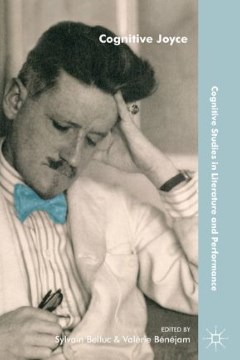
Belluc Sylvain, Bénéjam Valérie (2018) Cognitive Joyce. Dordrecht, Springer.
Seiten: 145-154
DOI: 10.1007/978-3-319-71994-8_8
Referenz:
Tadié Benoît (2018) „The invention of dublin as "naissance de la clinique": cognition and pathology in Dubliners“, In: S. Belluc & V. Bénéjam (eds.), Cognitive Joyce, Dordrecht, Springer, 145–154.